Clear process. Fair access.
Designing Booking Approvals to make workplace management effortless and transparent.
Timeline
June 2024 - February 2025
Team
Product Designer
Product Owner
Development Team
Client
EY
M&G
Tools
Figma + FigJam
Lucid
Context
As global enterprises like EY and M&G shifted to hybrid working, demand for high-value spaces - boardrooms, restricted labs, parking - became unpredictable. The existing first-come, first-served model couldn't hold up at scale. Resources were hoarded, conflicts escalated, and Booking Administrators were buried under manual approval emails with no structured way to manage competing requests across thousands of employees and multiple locations.
GemEx needed a configurable Booking Approvals Engine, a shift from manual oversight to automated, logic-based governance that ensured the right people had access to the right spaces, without the administrative friction.
Problem
The manual email-based approval process was the breaking point. It couldn't handle the complexity of enterprise-scale resource allocation, and the consequences were tangible: ghost bookings, operational bottlenecks, and growing frustration on both sides of the process.
The system needed to solve three things simultaneously:
Complex permission hierarchies
Approval logic had to work across multiple admin tiers - from Global to Local - with rules that reflected real organisational structures, not a flat list of permissions.
IT security integration
The solution had to connect seamlessly with existing enterprise infrastructure - SSO, Active Directory - without creating parallel identity management overhead.
Automated conflict resolution
Rather than routing every dispute to a human, the system needed predefined business rules capable of resolving booking conflicts automatically and consistently.
Research
Standard user interviews weren't enough here. I conducted a service-level audit of existing booking workflows — analysing support ticket data and running contextual inquiries with Booking Administrators and Facility Managers operating at enterprise scale, managing upwards of 1,000 employees each.
The goal was to separate user complaints from systemic failures. What we found was that the core problem wasn't usability — it was the complete absence of scalable logic to handle conflicting business rules.
Key findings:
Misallocation of resources
Without approval controls, spaces were regularly booked for the wrong group size or purpose - leaving some rooms chronically underused while others remained impossible to access.
Poor building utilisation
Inefficient bookings translated directly into wasted space -valuable areas sitting empty while teams elsewhere had no available options.
No transparency for employees
Users had no visibility into whether their requests were approved, pending, or rejected. The ambiguity created confusion and eroded confidence in the system.
Administrative overload
Admins were manually juggling availability checks, reallocation requests, and approval decisions across spreadsheets and disconnected systems - a process that didn't scale.
No priority framework
Without structured approval logic, there was no reliable way to ensure high-priority teams or critical meetings got access to the spaces they needed. The loudest voice, or fastest clicker - won.
Users
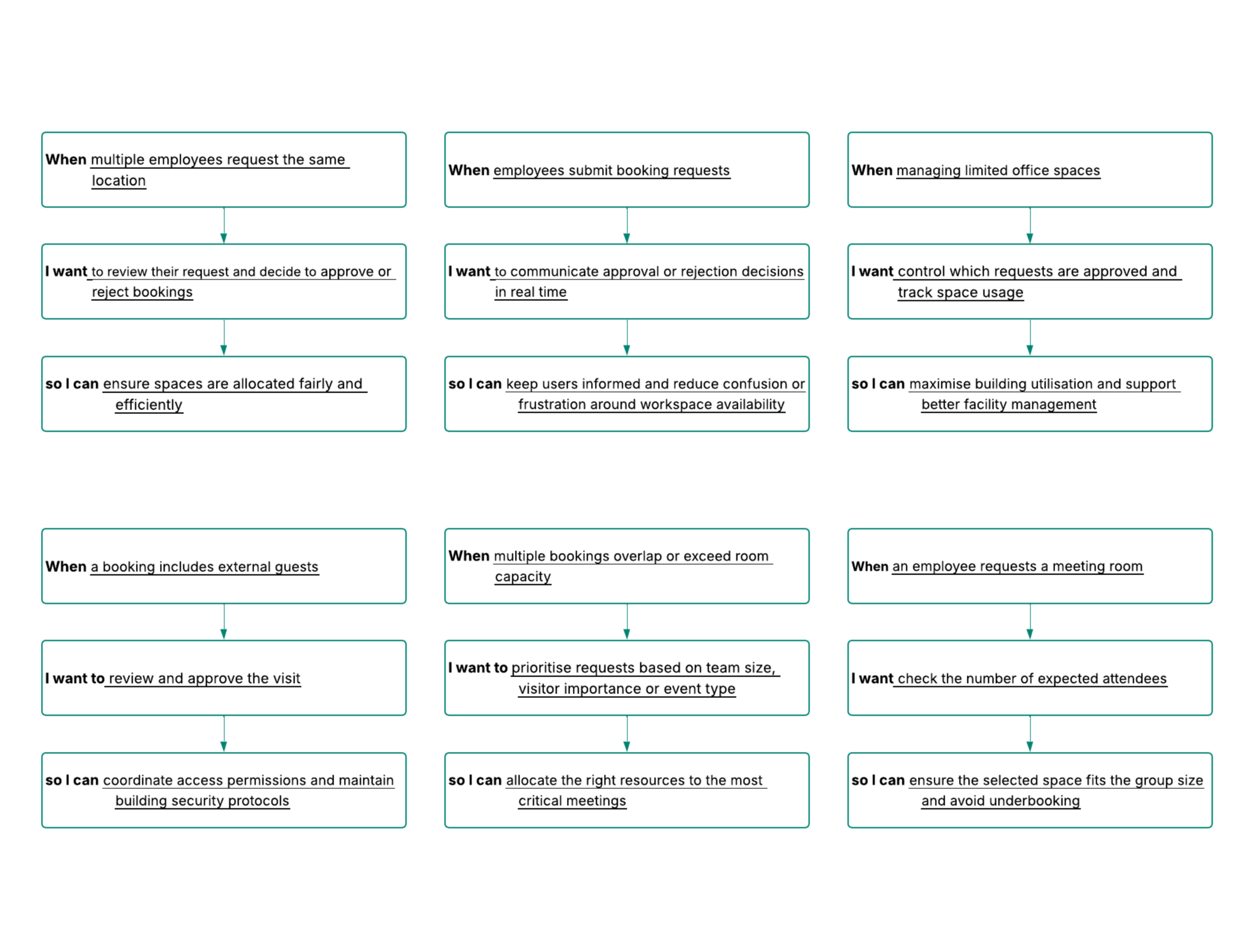
Booking Administrators are one of our two main personas, and understanding their goals was key to this project. I dove into their daily tasks and challenges to uncover opportunities for improvement. Using the Jobs To Be Done framework, I focused on what they’re trying to achieve and why.
Antipersona
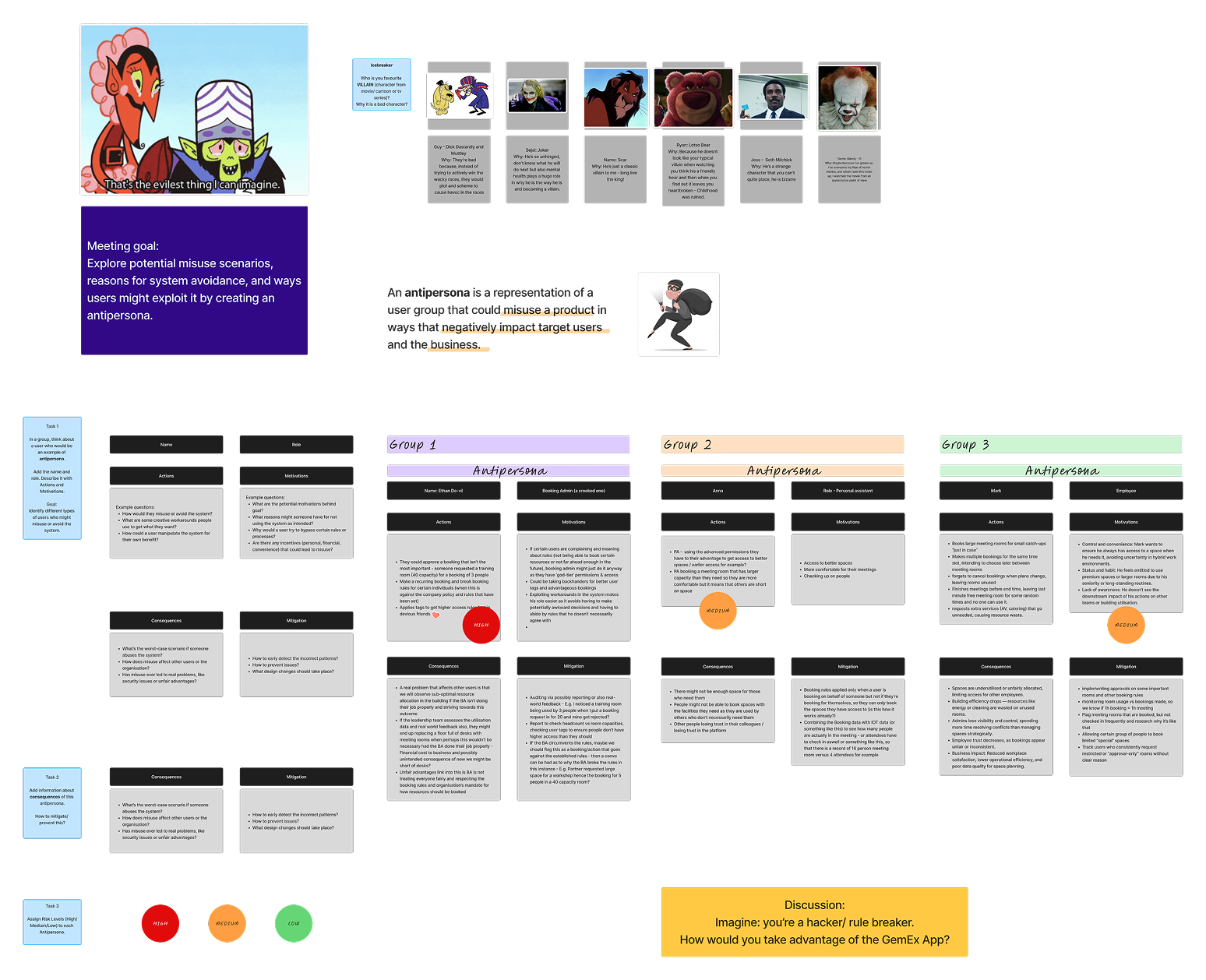
While analysing interviews with Booking Administrators and Facilities Managers, I noticed a recurring pattern: they were often trying to prevent certain booking behaviours that employees had developed over time. Employees can book spaces independently - through the GemEx app, an Outlook plug-in, internal request systems, or even by contacting Booking Administrators directly via email or phone.
This raised an important question:
Why do some employees would request meeting rooms that aren’t instantly available, even when other spaces can be booked right away?
To answer that, I explored user behaviours and analysed real booking data. This led me to identify patterns of misuse and inefficiency - and to introduce, for the first time in this project, the concept of an Antipersona. This approach helped represent users who might exploit or misuse the booking feature in ways that negatively impact both target users and the organisation, allowing us to design more intentional, balanced solutions.
I conducted an internal workshop with the team to explore and define an antipersona for the product - specifically focused on the Booking Approvals feature.
Thinking
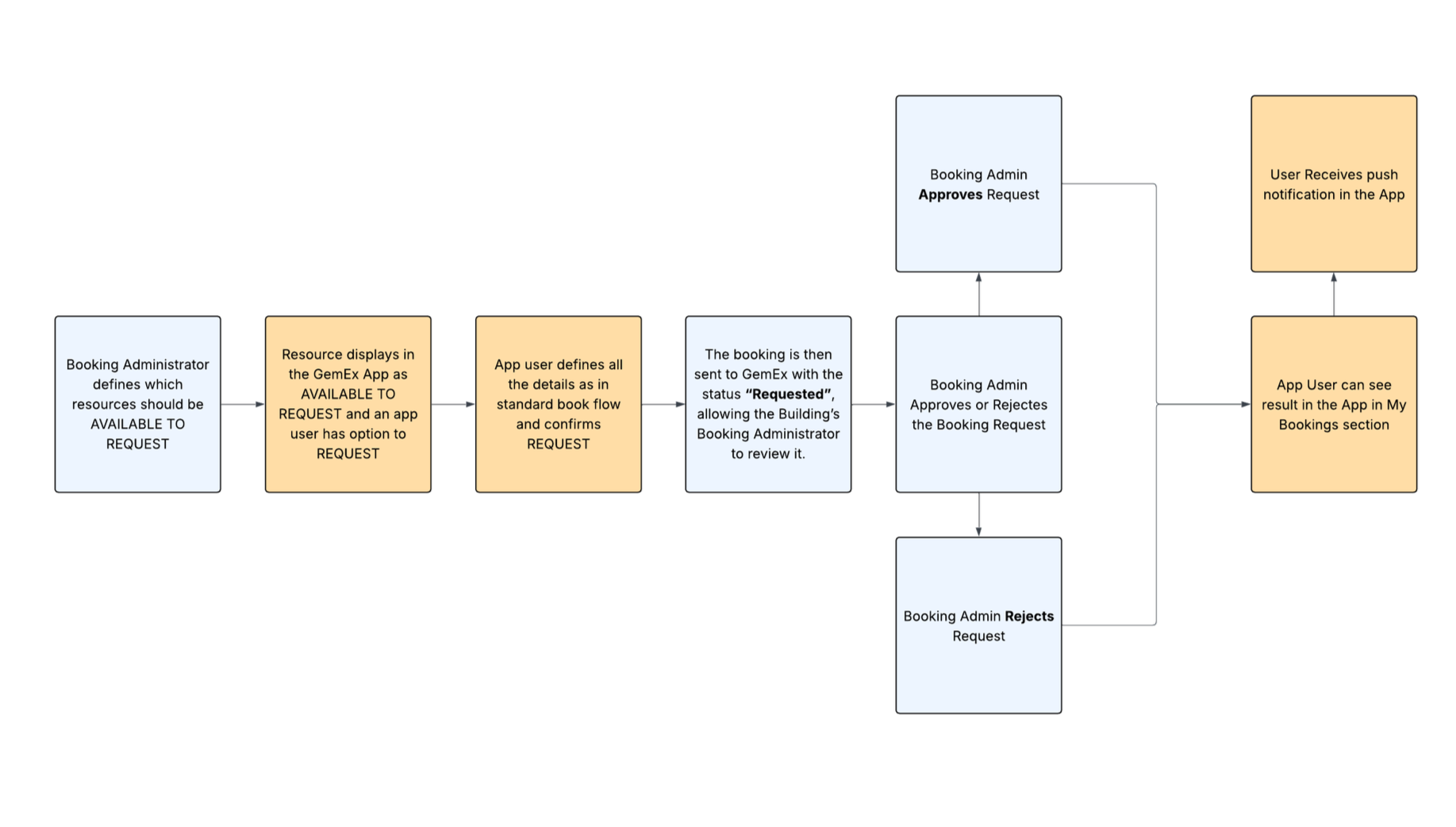
The challenge was to bring together the management tools for Booking Administrators in the GemEx Web Platform and the employee experience on the GemEx App. My goal was to create an intuitive, seamless solution that empowers both personas to complete their daily tasks efficiently and confidently.
Testing
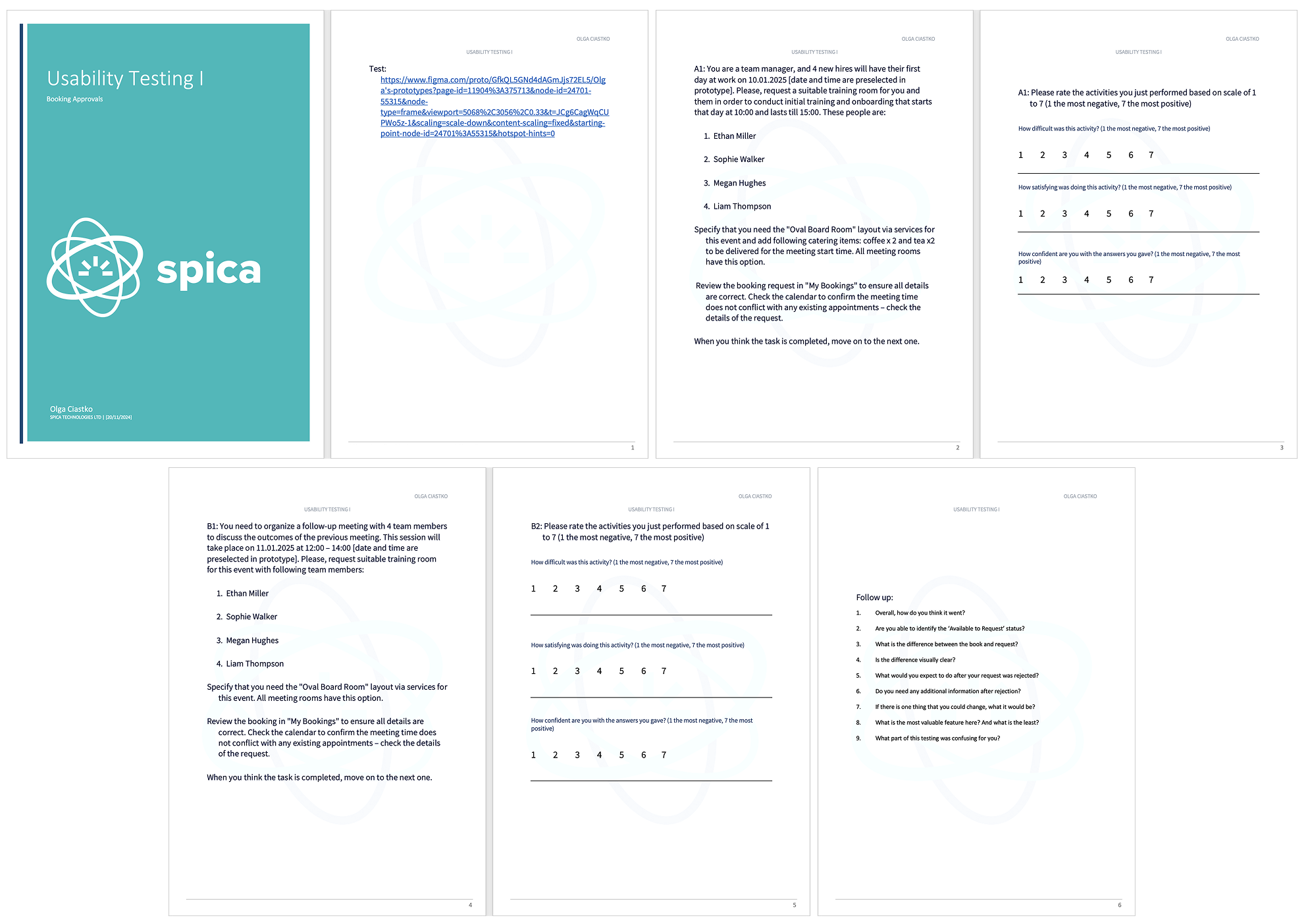
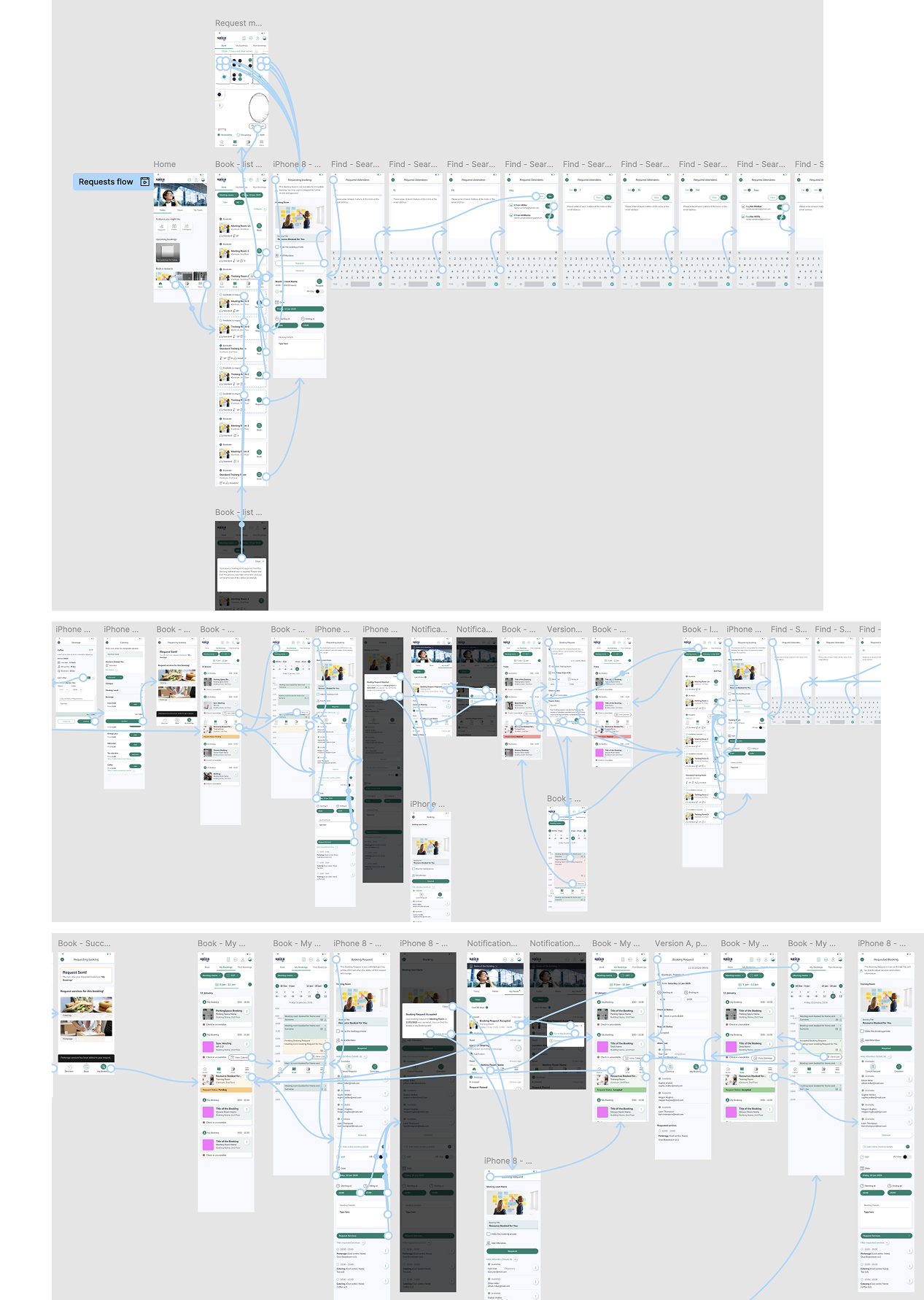
To validate the concept early, I built a simple prototype in Figma and tested it with users. These sessions helped me uncover first impressions, usability challenges, and confirmed whether our key UX decisions for the mobile app were moving in the right direction.
Outcomes
I analysed the usability testing findings, prepared a report highlighting the most critical issues, and shared it with the team.
Key Findings
Brick wall:
No one requested a meeting room - all participants booked rooms directly instead. The difference between bookable and available to request spaces wasn’t clear. The icon and status didn’t help, and users largely ignored the “Request” button.Lack of differentiation:
Participants expressed the need to clearly distinguish between meeting rooms that can be booked instantly and those requiring approval. They would typically request a room well in advance but prefer instantly available spaces for upcoming meetings.Missing feedback:
Users missed the information about accepted or rejected bookings once the confirmation pop-up disappeared. They needed a way to revisit that information - suggesting an event history or status view would improve clarity.
Actions to take:
Enable rejection reasons:
7 out of 7 participants wanted to know why a request was rejected - whether it was due to restricted access, unavailable services, or room limitations.Differentiate rooms available for request:
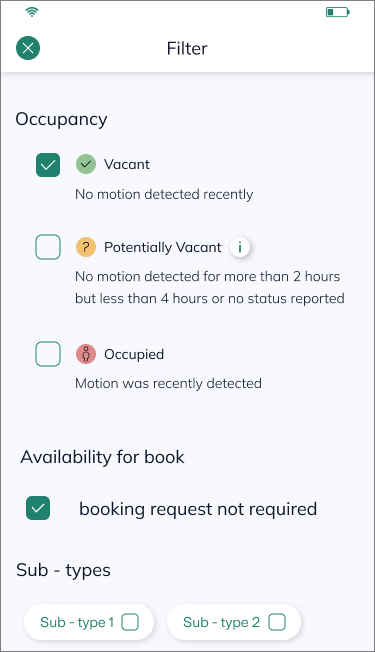
Clearly indicate which rooms require approval and add a Filter option to exclude them, helping users avoid confusion during booking.Improve booking management:
Provide an option to remove rejected bookings from My Bookings and the calendar view to keep the interface clean and relevant.
Iteration
After identifying key pain points, I refined the designs and introduced solutions to improve the overall booking journey. I then ran another round of usability testing with a new group of participants to validate these changes and see how the updated flow performed in real scenarios.
This second round revealed valuable insights - not only confirming that the redesign made the process clearer but also uncovering several unexpected edge cases that helped us refine the experience even further.
Problem: Forgotten Pending Request
The employee sends a request days in advance but never receives a response - admin missed notification. The day of the meeting, they assume it’s approved - but it’s not.
Solution: Introducing reminders for the employee in the app, that upcoming booking’s location hasn’t been confirmed yet.
Problem: Rejected Booking Without a Clear Reason
The employee receives a “Rejected” notification but doesn’t understand why - was the room unavailable, restricted, or the request incomplete?
Solution: Reinforcing need for a mandatory rejection reason field and clear feedback in the UI.
Option to filter out locations that require request.
Final designs
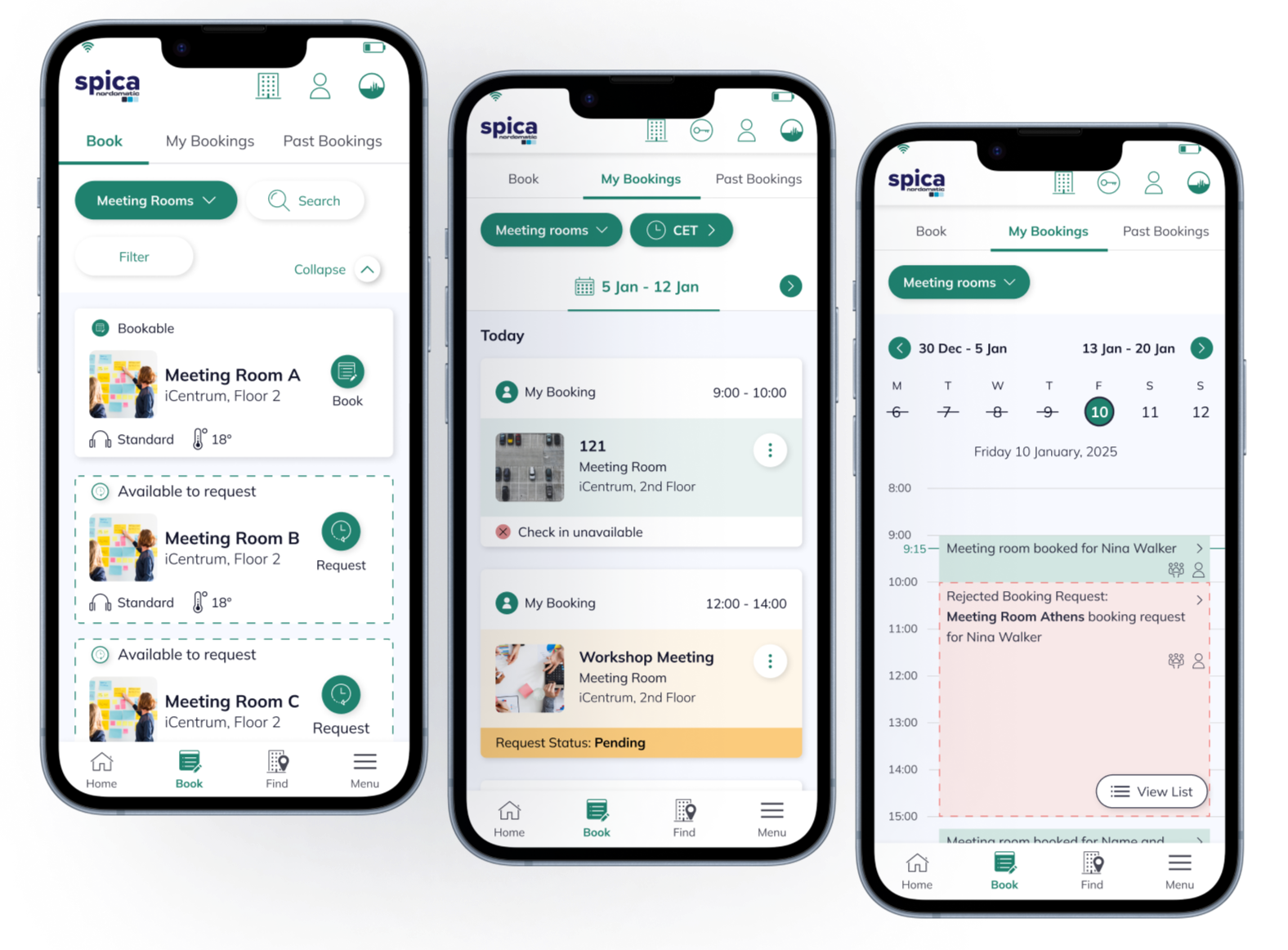
After iteration we decided on MVP approach - simple journey for Booking Admin on GemEx platform and intuitive interface for employee, who uses GemEx app.
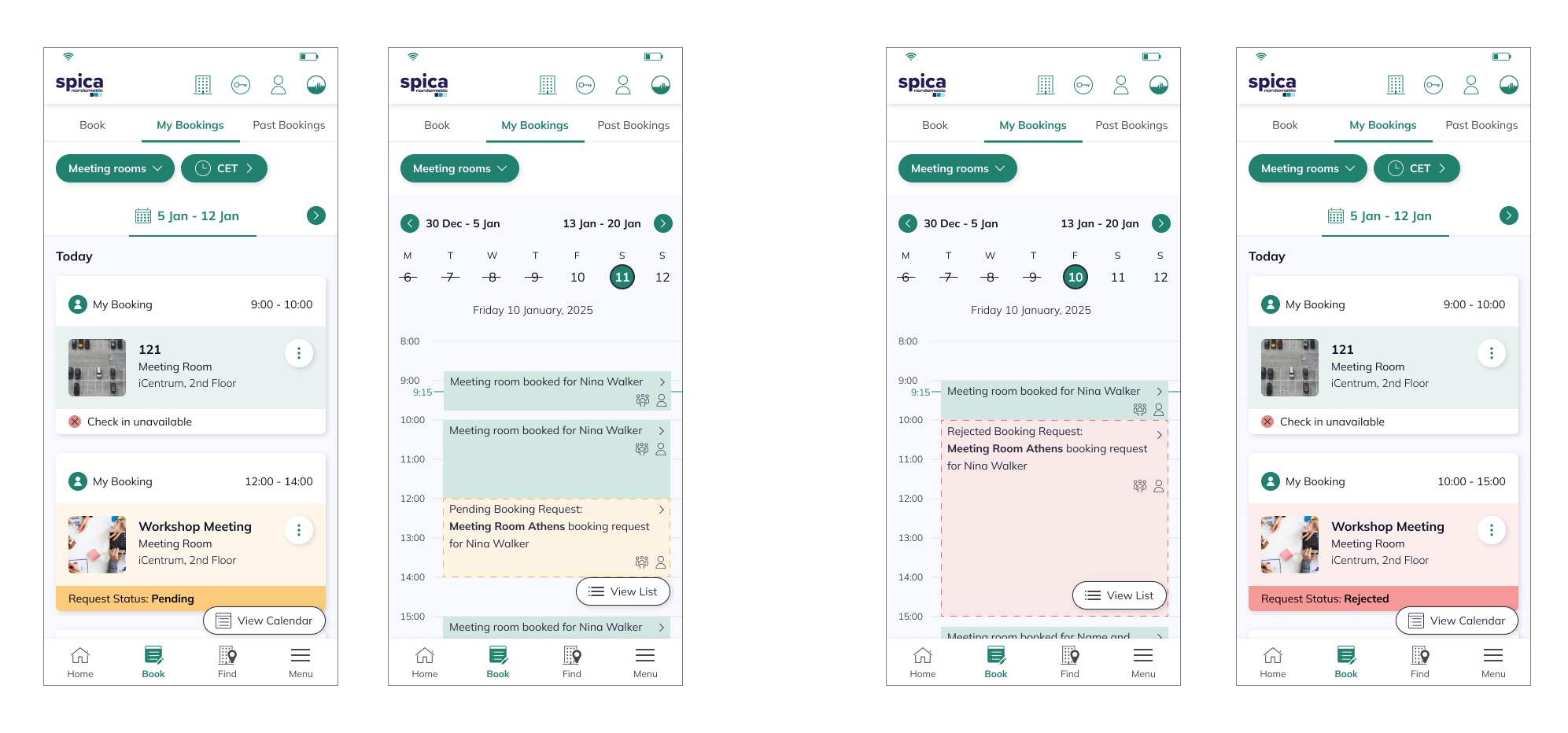
Rejection information for the app user
Calendar display with Pending and Rejected statuses
Impact
The Booking Approvals Engine moved from pilot to active use across multiple locations within the client portfolio and the results were immediate and measurable.
30% reduction in manual admin overhead
Automating approval logic freed Booking Administrators from the email-based bottleneck that had been consuming their operational capacity.
42% decrease in no-shows
Automated expiration rules eliminated ghost bookings at scale - returning valuable space to availability without any manual intervention.
300,000+ users across 50+ locations, zero critical downtime
The system deployed successfully at enterprise scale, proving the architecture was as robust in practice as it was in design.